Most bad bets start in the mind, not in the market.
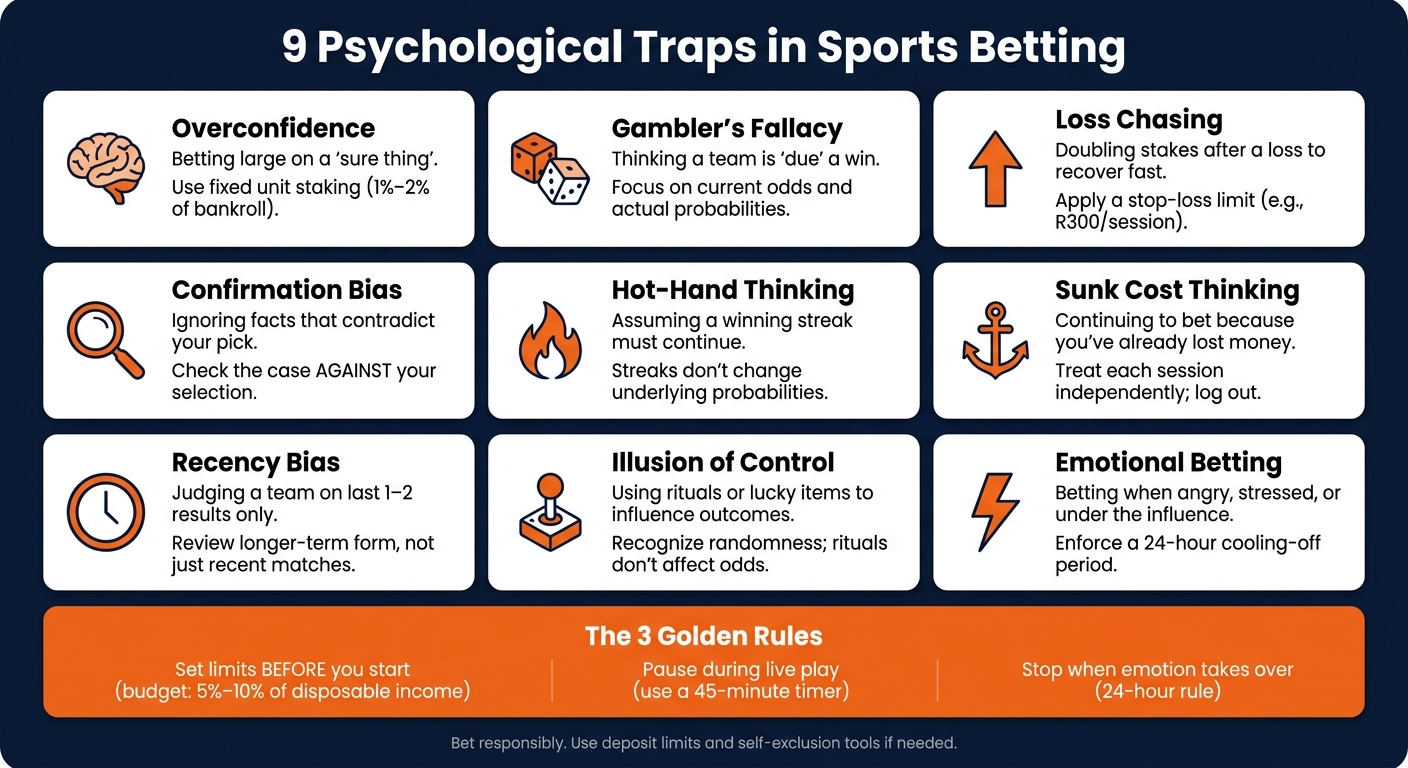
If I had to sum this up in one line, it would be this: knowing football well does not protect me from bad betting habits. The main traps are overconfidence, confirmation bias, recency bias, gambler’s fallacy, hot-hand thinking, illusion of control, loss chasing, sunk cost thinking, and emotional betting. Left unchecked, they can burn through a bankroll like R1,000 in only a few poor calls.
Here’s the short version:
- Overconfidence makes me bet as if I know more than the odds suggest.
- Confirmation bias makes me look for facts that back my pick and ignore the rest.
- Recency bias makes last week’s result feel bigger than long-term form.
- Gambler’s fallacy makes me think a team is “due”.
- Hot-hand thinking makes me think a streak must continue.
- Loss chasing turns one loss into a bigger one.
- Emotional betting leads to snap bets when I’m angry, stressed, or upset.
The fix is simple, even if sticking to it is hard:
- Set a betting budget at 5% to 10% of disposable income
- Keep each bet to 1% to 2% of bankroll
- Use a stop-loss, such as R300 per session
- Write down why I’m making each bet
- Pause live betting with a timer
- Take 24 hours off after a bad beat or heavy loss
- Use deposit limits or self-exclusion on platforms like Supabets if needed
| Trap | What it looks like | What I can do |
|---|---|---|
| Overconfidence | Big stake on a “sure thing” | Fixed unit size |
| Recency bias | Betting off the last match only | Check longer-term form |
| Gambler’s fallacy | “They must win now” | Focus on current odds and facts |
| Loss chasing | Doubling up after a loss | Stop-loss and log out |
| Emotional betting | Angry or stress-driven wagers | Wait 24 hours |
The core point: betting discipline matters more than gut feel. If I set limits before I start, slow down live bets, and stop when emotion kicks in, I give myself a far better shot of keeping control of my money and my decisions.
9 Psychological Traps in Sports Betting: Causes & Fixes
The main psychological traps that affect sports bettors
Overconfidence, confirmation bias, and recency bias
These three biases often show up together. That’s part of what makes them hard to spot.
Overconfidence is a common trap. If you follow a league closely, it’s easy to start thinking your knowledge is enough to beat the odds. But bookmakers build a margin into their prices, so knowing a team well doesn’t, by itself, give you an edge.
Confirmation bias often sits right next to overconfidence. Once you’ve picked a team, you start noticing the facts that support your view and brushing past the rest. Maybe you focus on a strong home record or an unbeaten run, while ignoring the actual probability behind the bet. That kind of selective research can still feel thorough, even when it isn’t.
Recency bias puts too much weight on the last one or two results. A team that has won its last two matches in convincing fashion can seem like a safe pick, even if those wins came against weaker opposition. If recent results are the main reason for the bet, recency bias is probably in play.
Gambler’s fallacy, hot-hand thinking, and illusion of control
Some traps come from getting chance wrong.
Gambler’s fallacy is the idea that a team is due for a win after a run of losses. Hot-hand thinking goes the other way. It assumes a winning streak will keep rolling. Both errors miss the same point: short runs happen, and they do not automatically change the underlying probabilities.
The illusion of control appears when a bettor starts treating rituals or lucky items as if they can affect the result. Those habits may feel comforting. They do not improve the odds.
Loss chasing, sunk cost thinking, and emotional betting
The most damaging traps often appear right after a loss or a strong emotional reaction.
Loss chasing is one of the worst habits in betting. After losing, a bettor might increase the next stake or ditch a planned approach to try win the money back fast. A small loss followed by a much larger stake can look like a quick fix, but it usually adds pressure and speeds up bankroll damage.
Sunk cost thinking makes it harder to stop. Once time and money have gone into a betting session, the mind starts treating those losses as a reason to continue instead of a reason to pause. That’s when betting can stop feeling like entertainment, especially if it starts affecting family, work, and other responsibilities.
Emotional betting adds even more risk. People tend to make impulsive calls when they’re angry, stressed, sad, or under the influence of alcohol or drugs. Betting on a favourite club out of loyalty, or placing one more wager while upset after a loss, usually pulls decisions further away from discipline and closer to repetition.
sbb-itb-00c3b18
How these traps damage decisions, bankroll, and wellbeing
How biased thinking changes betting behaviour
These traps do not stay in your head. They show up in the bet itself.
Psychological traps change decisions, not just thoughts. Overconfidence can lead bettors to ignore team news and back a so-called lock with too much money. Recency bias can trigger rushed live bets based on the last few minutes instead of the full match picture. And after a losing run, gambler’s fallacy can push someone into another multi because a win feels due.
That is what makes these patterns so hard to stop. The thought turns into an action, and the action often sets up the next bad call.
How bankroll pressure builds over time
The money damage often stacks up quietly.
A bettor who starts with R1 000 can lose the whole amount in just two poor decisions. One loss sparks a bigger recovery bet. The next mistake clears out the rest. On paper, each session may begin with good intentions. In practice, one emotional decision can spill into another.
Over time, that pressure does not stay inside the betting account. It can spread into daily life: unpaid bills, borrowed transport money, secrecy, anxiety, shame, and irritability. What started as a few bad bets can turn into stress that follows someone home.
Comparison table: trap, behaviour, and likely impact
The table below sums up how the main traps tend to show up.
| Psychological trap | Typical behaviour | Likely impact |
|---|---|---|
| Overconfidence | Ignoring team news; betting large on "locks" | Fast bankroll loss and shock when sure things fail |
| Recency bias | Increasing stakes after a win streak | Bigger swings and profits lost quickly |
| Gambler’s fallacy | Betting more on a "due" result after a losing run | Bankroll drained chasing an unlikely outcome |
| Loss chasing | Doubling stakes after a loss to break even | Rapidly increasing risk of total bankroll ruin |
Practical ways to reduce psychological traps
Set bankroll rules before betting starts
The best way to deal with these traps is to set your rules before the first bet goes on. That matters because one poor call can snowball fast.
Set a monthly gambling budget of no more than 5% to 10% of your disposable income. That means money left after the basics are covered: rent, food, transport, savings, and your emergency fund. It keeps the budget grounded in what you can afford to lose.
Then set one unit at 1% to 2% of your starting bankroll. On a R1 000 bankroll, that works out to R10 to R20 per bet. You should also set a stop-loss, such as R300 per session.
Use a written plan and slow down live decisions
Once those rules are on paper, the next step is to slow things down, especially with live betting.
Before logging in, write down your minimum odds, the maximum number of bets you’ll place that day, and the reason behind each selection. Live betting moves fast, and that pace can push people into snap decisions. A simple pause helps.
Set a 45-minute timer. When it rings, log out and review the bet before placing the next one. If a last-minute goal or a bad beat makes you want to react on the spot, use a 24-hour cooling-off period.
Comparison table: each trap matched with a practical response
The table below matches each trap with the fastest practical response.
| Psychological trap | Countermeasure | Example of use |
|---|---|---|
| Loss chasing | Stop-loss limit | Stop betting immediately at a pre-set daily loss limit. |
| Overconfidence | Fixed unit staking (1% to 2%) | Even on a "certain" result, limit the bet to R20 on a R1 000 bankroll. |
| Confirmation bias | Check the case against your pick | Before backing Kaizer Chiefs, look for injury news or poor recent form that could change the outcome. |
| Emotional betting | Mandatory waiting period | Wait 24 hours after a bad beat or heavy loss. |
| Gambler’s fallacy | Reality check | A team being "due" does not change the next match. |
Applying these habits on Supabets and key takeaways
Using Supabets features with more control
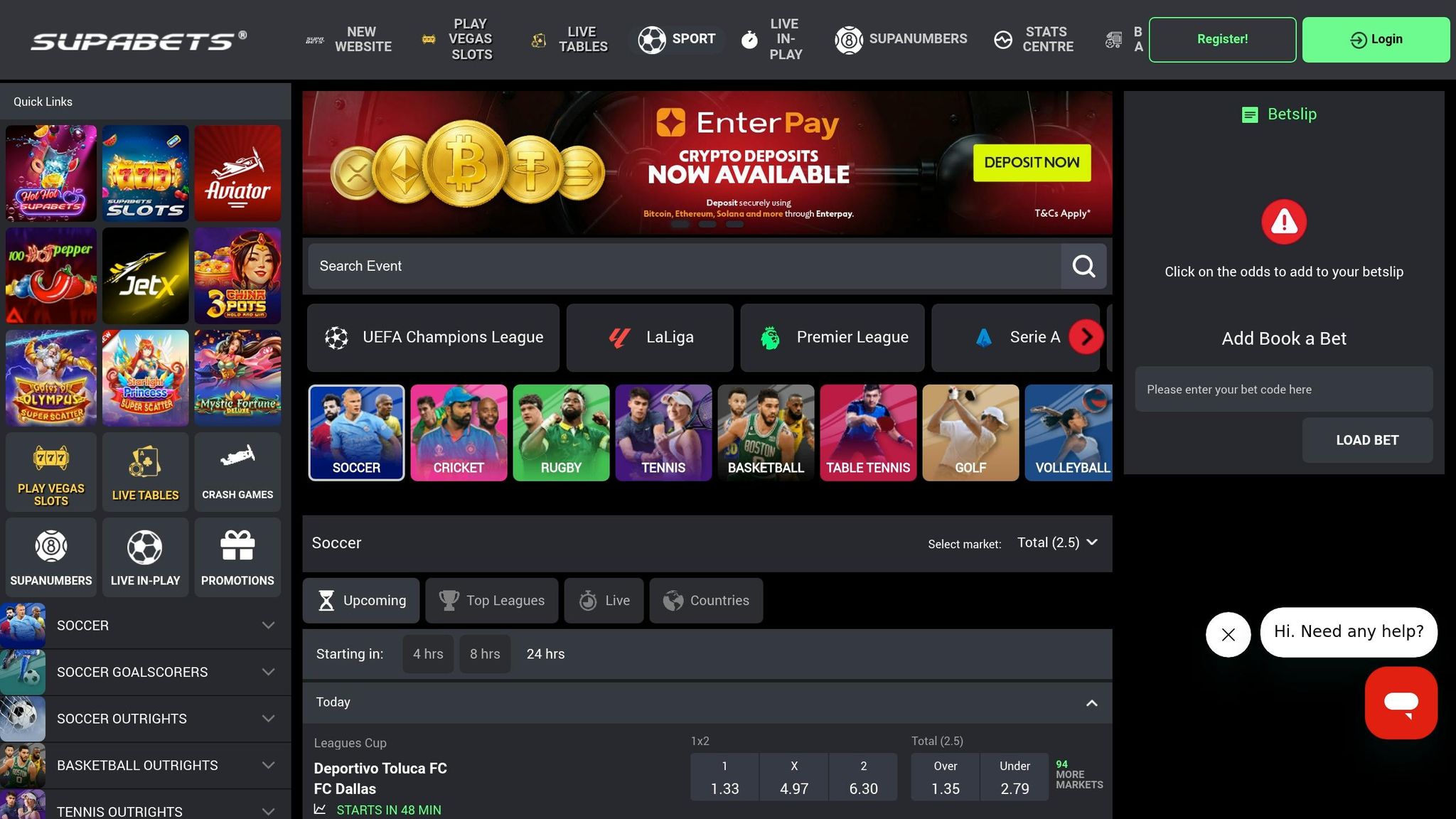
To put these rules into action on Supabets, start with the account controls. Set Supabets deposit limits around your preset bankroll cap, with a clear rand amount that acts as your ceiling. That way, the limit is in place before impulse gets a say.
Live betting calls for the same discipline, just at a faster pace. Set a timer before you begin, and when it goes off, stop. Simple as that. In fast-moving markets, a short pause can save you from a rash call.
If you feel frustrated, angry, or off-balance, take a step back and use temporary self-exclusion. Stop betting for a while. Loss chasing and emotional betting are usually the sparks that turn a rough patch into a much bigger mess.
Key takeaways
Set limits before you start. Pause during live play. Stop when emotion takes over. Use deposit limits, timers, and self-exclusion so psychological traps don’t end up steering your bets.
Top 7 Psychological Traps In Sports Betting.
FAQs
How do I spot bias before I place a bet?
Check if your decision is coming from emotion or loyalty instead of facts. If you’re upset, stressed, or under the influence, step back and leave the bet alone.
Also watch for loss-chasing, spending more time betting than you planned, dodging your responsibilities, lying or borrowing money to keep betting, or using gambling as a way to escape stress or boredom. Those are red flags. Don’t place the bet.
What should I do after a bad loss?
After a bad loss, the first thing to do is stop and step away from the platform.
Trying to win the money back usually makes things worse. Chasing losses can push you into more financial risk, and that spiral can happen fast.
It helps to treat the loss as the cost of entertainment, then shift your focus back to what matters most, like rent, bills, and other day-to-day expenses.
If stopping feels hard, don’t try to tough it out on your own. Contact Supabets support and ask them to deactivate your account or put a cooling-off period in place.
How do I set a safe betting budget?
Start by working out your monthly disposable income after rent, utilities, groceries and savings. A simple rule of thumb: use no more than 5% to 10% of that leftover amount for betting. If losing that money would put pressure on your finances, go lower.
Set daily, weekly or monthly deposit limits, then break your budget into smaller chunks so you don’t burn through it in one go. And once you hit your limit, stop. Bet for entertainment, not as a way to make money.