When it comes to betting, your success often depends on one critical decision: choosing discipline over emotion. Discipline means sticking to clear rules for managing your bankroll, while emotional betting often leads to impulsive decisions driven by wins or losses. Here’s why discipline matters and how it can protect your funds:
- Disciplined Betting: Bet only 1–3% of your bankroll per wager, separate betting funds from daily expenses, and track every bet. This approach minimises risk and helps you stay in control during losing streaks.
- Emotional Betting: Chasing losses, increasing stakes impulsively, or betting based on feelings can quickly drain your bankroll and lead to financial stress.
- Practical Tools: Platforms like Supabets offer deposit limits, loss caps, and tracking tools to help you maintain discipline and avoid emotional decisions.
The key takeaway? Discipline safeguards your bankroll, while emotions can lead to ruin. Stick to a clear plan, use available tools, and track your bets to stay in control.
How Discipline Works in Bankroll Management
What Disciplined Betting Looks Like
Disciplined betting begins with a clear separation of funds. Your betting bankroll should be entirely distinct from the money you use for everyday expenses – things like rent, groceries, and bills should come from a separate account. This ensures you’re not dipping into essential funds for betting purposes.
Next comes unit sizing: this means betting only 1–3% of your bankroll on any single wager. For example, with a bankroll of R1,000, a 2% unit would be R20. This approach ensures that no single bet can jeopardise your overall funds. Even professional bettors, who tend to lose 45–50% of their bets in highly efficient markets, rely on small, consistent stakes to protect their capital.
Disciplined bettors also stick to a defined staking plan. Two common methods are flat betting, where you wager the same amount on every bet, and percentage staking, where your bet size adjusts based on changes in your bankroll. Both methods aim to maintain consistent risk levels and provide a structured approach to betting.
Why Disciplined Betting Works
The logic behind disciplined betting is simple: recovering from a loss gets harder the more you lose. For instance, if you lose 50% of your bankroll, you would need a 100% gain just to break even. By keeping bets small – typically around 1–2% of your bankroll – you can endure losing streaks without risking financial disaster.
"Bankroll management is not about avoiding losses. It is about avoiding ruin."
Discipline also shields you from common psychological pitfalls. It helps you avoid "tilt", where emotional reactions to losses lead to reckless betting, and the "Gambler’s Fallacy", the mistaken belief that a win is inevitable after a string of losses. By sticking to predetermined bet sizes, you can keep emotions in check and avoid impulsive decisions.
Another key benefit of discipline is careful tracking. Logging every bet – details like the sport, odds, stake, and outcome – turns your betting history into a treasure trove of data. Analysing this data can uncover profitable patterns or highlight strategies you should avoid.These disciplined habits form the backbone of successful betting.
How to Maintain Discipline in Your Betting
To stay disciplined, set firm limits. Many platforms, like Supabets, offer tools to help you manage your betting habits. You can set daily or weekly deposit limits, loss limits, and session time limits, which can prevent you from chasing losses or overextending yourself.
Tracking tools are just as crucial. Whether you prefer a simple spreadsheet or specialised apps like BetMinder or Bankroll Tracker, recording every bet is essential. This habit is particularly important during losing streaks, when the temptation to stop tracking – known as the "Ostrich Effect" – can lead to poor decisions.
For professionals, adjusting unit sizes is a strategic move, not a sign of failure. They typically resize their units only after their bankroll changes by 20–30%. For instance, if your R1,000 bankroll drops to R700, recalculating your unit size to 2% of R700 (around R14) helps you preserve your funds and continue betting responsibly.
sbb-itb-00c3b18
How Emotions Affect Bankroll Management
What Emotional Betting Means
Emotional betting happens when feelings take over and push aside logical decision-making. This often leads to snap decisions in response to situations like a big loss, an unexpected win, or even outside stressors. A common example is chasing losses – after losing money, you might feel compelled to make larger bets in an attempt to recover quickly, disregarding your usual limits. This kind of impulsive behaviour is particularly risky in fast-paced games like online slots, where there’s little time to think.
"Emotions can run high in the realm of betting, leading to impulsive choices." – Chris Beaumont, Author
Another emotional trap is using gambling as a way to cope with negative feelings like stress, anxiety, or depression. When betting shifts from being a fun activity to a method of escapism, it’s a clear sign that emotions are in control.
These impulsive actions can lead to both financial losses and emotional strain, making it harder to enjoy gambling as a recreational activity.
Problems Caused by Emotional Betting
When emotions take the wheel, your bankroll management can go out the window. Instead of focusing on long-term strategies, emotional betting prioritises quick recovery, which can drain your funds in no time. For example, abandoning safeguards like the 1% rule – where you limit single bets to 1% of your total bankroll – leaves you vulnerable to significant losses.
"By recommending that you wager no more than 1% of your bankroll on a single bet, this rule acts as a shield against major losses." – Chris Beaumont, Author
Studies show that longer gambling sessions often lead to greater losses. This happens because extended playtime can dull your sense of time and weaken your self-discipline. Beyond the financial toll, emotional betting can take the fun out of gambling and create financial stress that spills over into your daily life.
Understanding these risks is a vital step in managing emotional triggers and staying in control.
Spotting Your Emotional Triggers
Learning to identify when emotions are steering your betting decisions is key. Physical signs like a racing heartbeat, sweating, shallow breathing, or even clenching your jaw or fists can signal that you’re losing control. Emotional cues, such as panic, anxiety, or feeling overwhelmed, are equally telling.
"Our emotions give us important information about what’s happening, internally and externally. They’re kind of like our personal alarm system." – Allaya Cooks-Campbell, Certified Integrative Wellness & Life Coach
Cognitive signs are another giveaway. For instance, obsessing over a recent loss or fixating on missed opportunities can indicate that emotions are clouding your judgement. Behavioural shifts, like sudden mood swings or overreacting to small setbacks, are red flags too. Experts suggest limiting gambling to no more than four days a month and keeping bets to under 1% of your household’s monthly income. If you’re gambling more frequently or spending beyond these limits, it’s time to pause, reassess your emotional state, and step away if needed.
Mastering Essential Steps for Smart Bankroll Management When Sports Betting
Discipline vs. Emotion: Direct Comparison
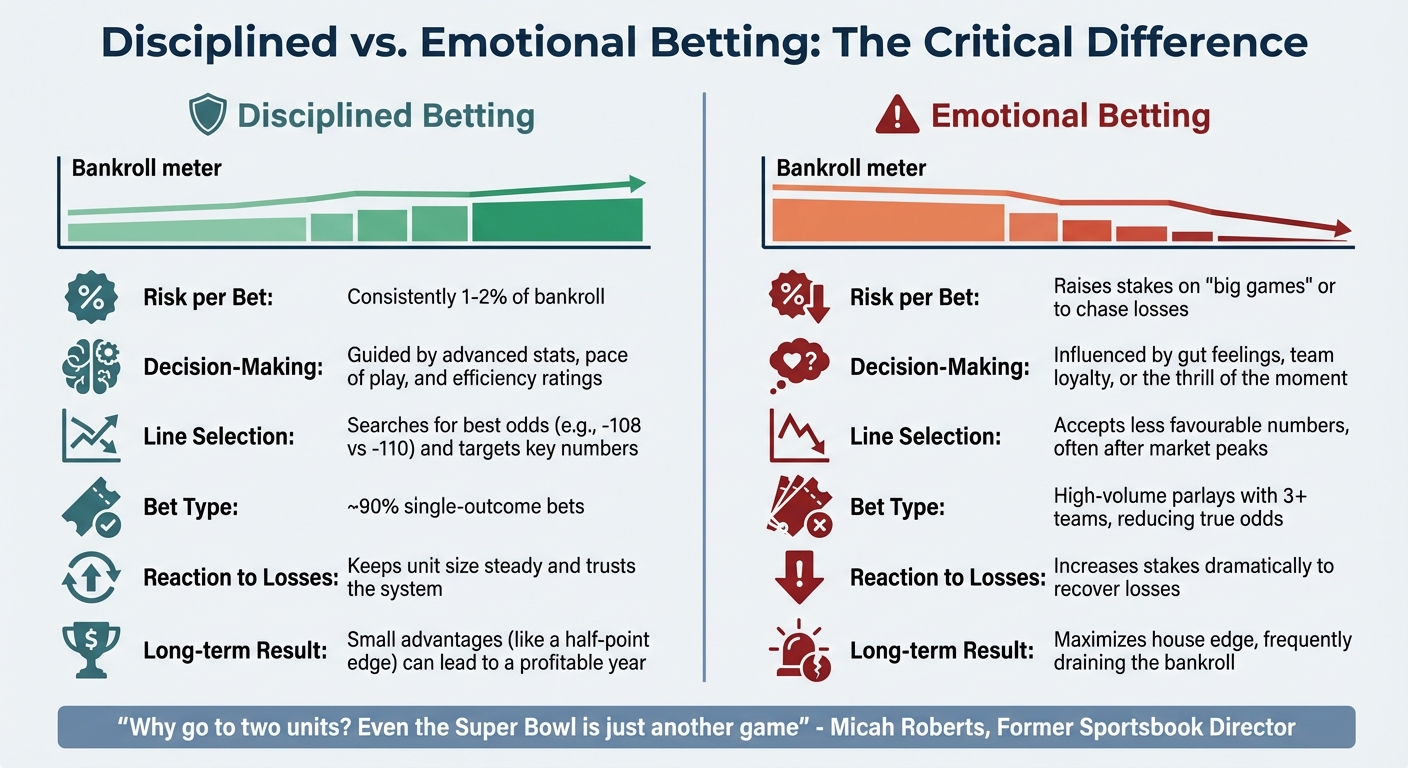
Disciplined vs Emotional Betting: Bankroll Management Comparison
Side-by-Side Scenario Comparison
The difference between disciplined and emotional betting becomes strikingly evident when you see it in action. Disciplined bettors stick to a consistent risk of 1%–2% of their bankroll per bet, no matter the event. Emotional bettors, on the other hand, often increase their stakes for high-profile games, throwing caution to the wind and bypassing basic safeguards.
"Why go to two units? Even the Super Bowl is just another game; you don’t have to bet two or three units just because it’s the Super Bowl."
– Micah Roberts, Former Sportsbook Director
Disciplined bettors focus on finding value by shopping for the best odds available. Emotional bettors? They often settle for less favourable odds, driven by impulse rather than strategy. This stark contrast lays the groundwork for a detailed side-by-side comparison.
Here’s a breakdown of how these approaches differ:
| Factor | Disciplined Betting | Emotional Betting |
|---|---|---|
| Risk per Bet | Consistently 1%–2% of bankroll | Raises stakes on "big games" or to chase losses |
| Decision-Making | Guided by advanced stats, pace of play, and efficiency ratings | Influenced by gut feelings, team loyalty, or the thrill of the moment |
| Line Selection | Searches for the best odds (e.g. –108 vs –110) and targets key numbers | Accepts less favourable numbers, often after market peaks |
| Bet Type | Roughly 90% single-outcome bets | High-volume parlays with three or more teams, reducing true odds |
| Reaction to Losses | Keeps unit size steady and trusts the system | Increases stakes dramatically to recover losses |
| Long-term Result | Small advantages (like a half-point edge) can lead to a profitable year | Maximises the house edge, frequently draining the bankroll |
Disciplined bettors typically allocate the majority – at least 90% – of their bankroll to single-outcome bets, which helps them maintain stability and avoid the pitfalls of multi-leg parlays. These parlays, while tempting with their potential for big payouts, come at a cost: each added selection increases the house’s edge. Emotional bettors often fall into this trap, chasing high rewards without recognising the long-term risks.
Over time, these differences become even more pronounced. Disciplined bettors can endure losing streaks and still come out ahead by capitalising on small edges. Emotional bettors, however, often see their bankrolls dwindle quickly due to impulsive decisions and poor bankroll management.
"Over the course of a season, getting a half-point here and there, and paying less juice on the bets you like (–108 compared to –120) can make the difference between a profitable and losing year."
– Larry Hartstein, SportsLine Expert
Developing Discipline to Control Emotional Betting on Supabets
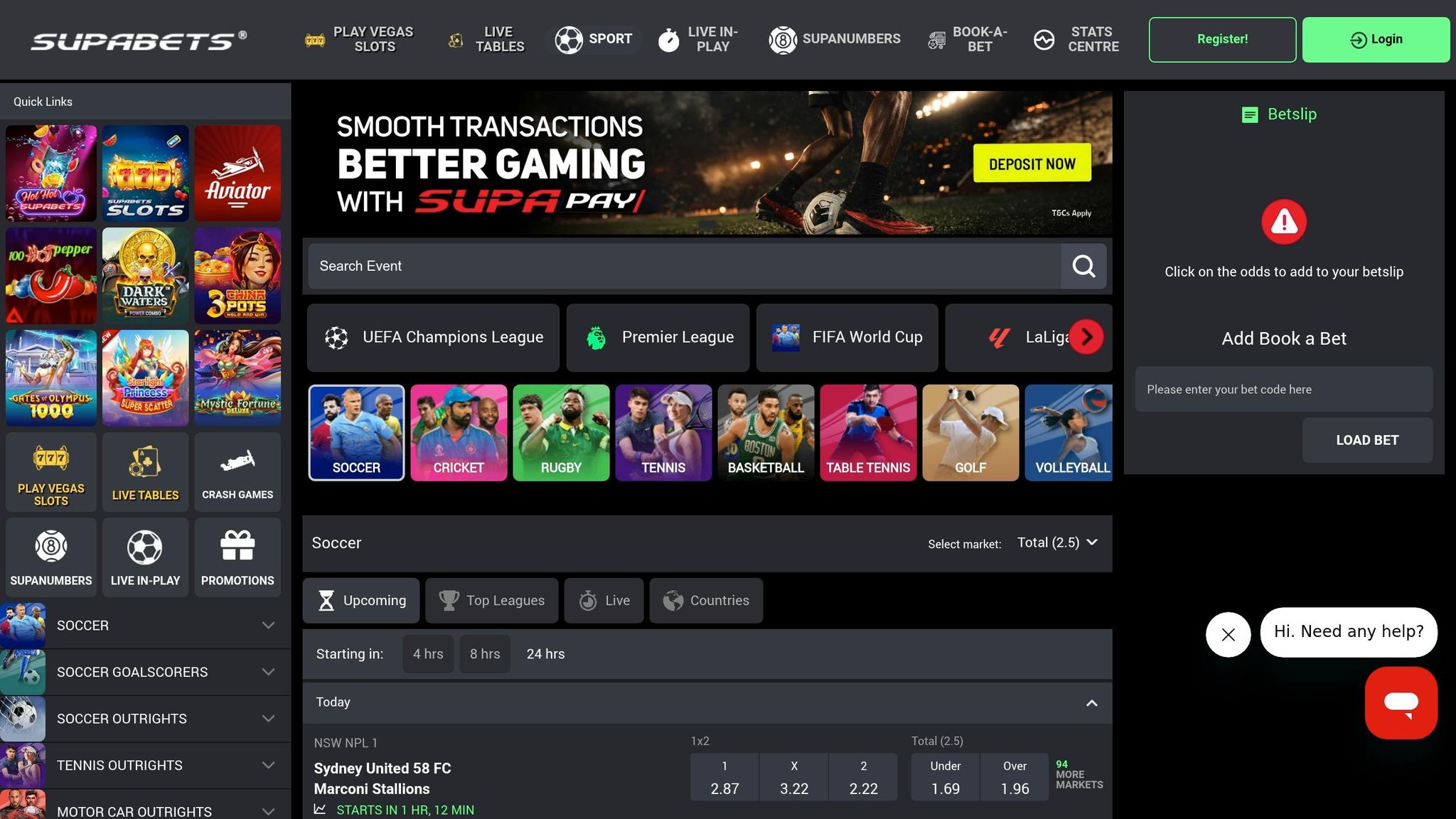
Using Supabets Tools for Better Bankroll Control
Supabets provides a Responsible Gaming Suite to help bettors manage their impulses and avoid emotional betting. This suite includes tools like deposit limits, time limits, reality checks, and self-exclusion options – all accessible via your account settings. For example, you can set a weekly deposit limit of R500 or restrict your session time to 30–60 minutes. These measures help prevent chasing losses.
Another useful feature is Early Cash Out, which allows you to lock in profits or reduce losses if a game takes an unexpected turn. Additionally, the VIP programme offers cashback on net losses, with a tiered system: 5% for Silver, 10% for Gold, and 15% for Platinum/Diamond members. The Supabets mobile app also enhances control with real-time bet tracking and the "Book a Bet" feature, which supports more calculated decisions.
When combined with these tools, a personalised bankroll management plan can further reduce impulsive betting.
Setting Up Your Own Bankroll Management Plan
Keep your betting funds separate from your daily expenses. Use a dedicated account or e-wallet exclusively for betting. To stay disciplined, allocate 2–5% of your monthly disposable income as your betting bankroll. For instance, if you have R2,000 left after covering essentials, your bankroll should range between R40 and R100. For each bet, stick to 1–2% of your bankroll. If you start with R500, this means placing bets of R5 to R10. Supabets’ low minimum deposit option (starting at just R1) is a great way to practice with smaller stakes.
Tracking your bets, especially losses, is crucial for identifying emotional triggers. Gambling writer Sofoluwe Mayowa explains:
"Tracking your bankroll is most valuable when you are losing because it reveals leaks in your game."
Set a stop-loss limit at 40–50% of your session bankroll and step away if you hit that limit. If your bankroll takes a significant dip, reduce your stakes immediately. Mayowa offers this advice:
"Treat lowering your stakes as a strategic reset, not a failure. If you can’t drop down when the maths says so, you don’t have a bankroll strategy – you have a gambling habit."
Lastly, activate Supabets’ reality check notifications to stay aware of how much time and money you’re spending. By combining these strategies with the tools Supabets offers, you can create a disciplined betting approach that minimises emotional decisions and protects your bankroll.
Conclusion
We’ve explored how sticking to calculated, disciplined betting can safeguard your bankroll, while impulsive, emotional decisions can quickly erode it. The distinction between discipline and emotion in bankroll management often determines whether you stay in the game or face financial ruin. As betting expert Jack Andrews puts it:
"Proper bankroll management won’t turn a losing bettor into a winning bettor, but it could turn a winning bettor into a losing bettor".
Emotional betting tends to lead to overbetting, chasing losses, and ignoring the reality of variance. Discipline, however, acts as a shield for your capital, ensuring you can keep betting even during inevitable losing streaks.
The essence of this is straightforward: discipline always triumphs over emotion. Viktor Frankl expressed this powerfully:
"Between stimulus and response there is a space. In that space is our power to choose our response. In our response lies our growth and our freedom".
That moment of pause between a loss and your next wager represents disciplined bankroll management. It’s where you choose long-term stability over fleeting relief.
Supabets’ tools are designed to support this disciplined mindset. Features like deposit limits, reality checks, and the Early Cash Out option help you manage emotions effectively. By establishing a dedicated bankroll, sticking to a staking strategy that limits risk, and regularly reviewing your results, you can identify and address emotional triggers. As Jack Andrews wisely notes:
"The best thing that you can buy with your winnings is a bigger bankroll".
Take the first step today. Leverage Supabets’ Responsible Gaming Suite, create a personalised bankroll plan, and commit to the discipline that sets successful bettors apart from those who burn out. Your future success starts with the choices you make now.
FAQs
What bankroll size should I start with?
When deciding on your starting bankroll, choose an amount that you can afford to lose without jeopardising your financial well-being. Betting responsibly means managing your wagers with care and sticking to a disciplined approach. Avoid letting emotions influence your decisions, and follow a strategy that matches your comfort with risk and your long-term objectives.
When should I change my unit size?
When your unit size no longer matches your bankroll, risk tolerance, or betting goals, it’s time for a change. For instance, if your current unit size is draining your bankroll too fast or causing you to make emotional decisions, it’s a clear sign to reevaluate. Adjusting your unit size regularly helps you stay disciplined, prevents overexposure, and promotes responsible betting habits that keep your bankroll management on track.
How do I stop chasing losses?
To avoid chasing losses, it’s essential to emphasise responsible gambling and resist the emotional pull to recover lost money in a hurry. Be aware of the psychological factors that can push you towards this behaviour and place importance on making calm, well-thought-out decisions. Rather than acting on impulse, focus on enjoying the experience over time while keeping your betting habits under control.