Losing streaks are normal, but your reaction to them determines the outcome. Whether you’re betting on Soccer 13 or playing fast-paced games like Aviator, losing streaks can trigger frustration, anxiety, or desperation. These emotions often lead to impulsive decisions like chasing losses or increasing bets – behaviours that can worsen your financial situation.
To stay in control:
- Pause and reset: Take a break after losses (15 minutes to a few days).
- Recognise emotional traps: Avoid the gambler’s fallacy, sunk cost fallacy, and loss aversion.
- Set financial limits: Separate betting funds from daily expenses, and stick to unit sizes (0.5%-2% of your bankroll).
- Use tools: Platforms like Supabets offer deposit limits, time-outs, and loss caps.
- Track patterns: Keep a betting journal to analyse mistakes and emotional triggers.
Losing streaks are temporary, but poor discipline can have lasting consequences. Focus on long-term strategy, not short-term recovery, and remember: "Winners think clearly and act with discipline."
Psychological Traps During Losing Streaks
Cognitive Biases That Affect Your Decisions
Your brain is wired to find patterns – even when none exist. This natural tendency can backfire during a losing streak, pushing you into predictable mental traps.
One of the most common is the gambler’s fallacy. This is the faulty belief that after a string of losses, a win is "due." The truth? Each bet or spin is independent, and past outcomes have no bearing on future ones.
Then there’s the sunk cost fallacy, which makes you feel like you must keep going because you’ve already lost so much. For example, "I’ve already lost R500, so I need to keep playing to win it back." But here’s the hard reality: the money you’ve spent is gone, and chasing it often leads to even greater losses .
Loss aversion piles on even more pressure. Psychologists Daniel Kahneman and Amos Tversky discovered:
"Losses feel roughly twice as painful as equivalent gains feel good.”
In other words, losing R200 can sting far more than the satisfaction of winning R200. This imbalance can push you into making rash decisions in an effort to avoid further pain.
These biases become even more dangerous when emotions are running high, setting you up for impulsive and risky behaviour.
How Emotions Make Biases Worse
Emotions can intensify these cognitive traps. Frustration, panic, or anger can shift your thinking from calm and calculated to impulsive and reactive – a state known as "tilt" in betting circles.
Studies show that after a loss, average bet sizes increase by 40–80%, and after three consecutive losses, they can more than double. Even worse, bets placed following losses are typically made 2–3 times faster than usual, leaving little time for proper judgement.
Betting expert Godfrey Kamundi shares his experience:
"I would panic and convince myself I was just one smart bet away from getting even. What ultimately changed things wasn’t motivation, but having a good structure."
Stress and fatigue only add to the problem, further clouding your ability to think clearly and resist impulsive choices.
Recognising the Problem for What It Is
The first step to breaking free from these traps is recognising them for what they are: natural mental patterns, not personal failings. These biases affect almost everyone, no matter how skilled or experienced they are.
As Andrew Edwards wisely points out:
"What separates a short-lived losing streak from a bankroll disaster is discipline, risk management, and the ability to control emotion – not luck."
Feeling stuck in a sunk cost cycle or caught in a tilt doesn’t mean you’re a poor bettor; it means you’re human. The real skill lies in identifying these feelings before they dictate your next move. That awareness is where true control begins.
sbb-itb-00c3b18
Practical Ways to Manage Your Emotions
Pause and Reset
When emotions start to cloud your judgement, the best immediate action is to stop betting.
Your ability to think clearly is at its lowest right after a loss. Taking a break – just 15 to 20 minutes – can help shift your mindset from reacting emotionally to thinking more logically.
"The most useful thing you can do right now is accept that the loss happened, close the app, and walk away."
For more extended losing streaks, consider stepping away for 24 to 48 hours. This can help you avoid the temptation to chase losses, which often leads to bigger setbacks. Here’s a quick guide to different types of breaks and when to use them:
| Break Type | Duration | When to Use It |
|---|---|---|
| Immediate Reset | 15–20 minutes | After a single significant loss |
| Cooling-Off Period | 24–48 hours | After hitting your daily stop-loss limit |
| Strategic Break | 1–7 days | Following a multi-day losing streak |
| Session Limit | Max 2 hours | To avoid errors caused by fatigue |
If stepping away isn’t an option, there are quick techniques you can use to regain emotional balance on the spot.
In-the-Moment Emotional Tools
When a break isn’t possible, in-the-moment strategies can help you manage emotions and avoid impulsive decisions.
Deep breathing is one of the simplest yet most effective tools. A few slow, intentional breaths can lower your heart rate and ease physical tension. Combine this with a quick body scan – check if your jaw is clenched, shoulders are tense, or chest feels tight. Recognising these physical signs can help you realise when emotions are driving your decisions.
Another helpful approach is to name your emotion out loud. Saying something like "I feel frustrated" or "I’m desperate" creates a small mental gap between the emotion and your next action. This pause can help you shift from reacting to observing, giving you a chance to make a more thoughtful decision.
Setting Emotional and Financial Limits
Pausing and using emotional tools are important, but setting clear limits is what helps you stay in control over the long term.
Start by separating your betting funds from your daily living expenses like rent and groceries. This way, losses won’t feel like a personal financial crisis. Stick to a fixed unit size for each bet – typically 0.5% to 2% of your bankroll. This ensures that even a bad streak won’t destabilise your finances.
Another key step is setting a hard daily stop-loss limit. For instance, if you lose five units in a session, stop betting immediately. This kind of discipline helps prevent emotional decisions from escalating your losses.
"Losing streaks are temporary. Poor discipline is permanent."
Many betting platforms, such as Supabets, offer responsible gaming tools. These include options to set deposit and loss limits in advance, which can help you stick to your boundaries. And if losses ever feel unmanageable, reach out to the National Responsible Gambling Programme (NRGP) at 0800 006 008 for support.
How Professional Traders Survive Losing Streaks
Building Habits That Keep You in Control
Creating habits that encourage disciplined choices can make a world of difference, especially when emotions might push you towards impulsive bets. By combining these habits with earlier strategies like pausing and resetting, you’ll strengthen your ability to manage betting decisions over the long term.
Bankroll and Session Management
Start by setting a clear monthly entertainment budget – for example, R1 000 – that won’t interfere with your essential expenses. Break this amount into smaller session budgets, like R100 per session, and keep this money in a separate account or wallet.
To keep control, limit each bet to just 1–5% of your session budget. For instance, if your session budget is R100, your bets should stay between R1 and R5. Use a timer to manage your sessions, aiming for 45–90 minutes, and set strict stop-loss and stop-win limits. For example, you might decide to stop if you lose R100 or win R150. These systems act as a safety net, especially during moments when your discipline might falter.
Using Supabets’ Responsible Gaming Tools
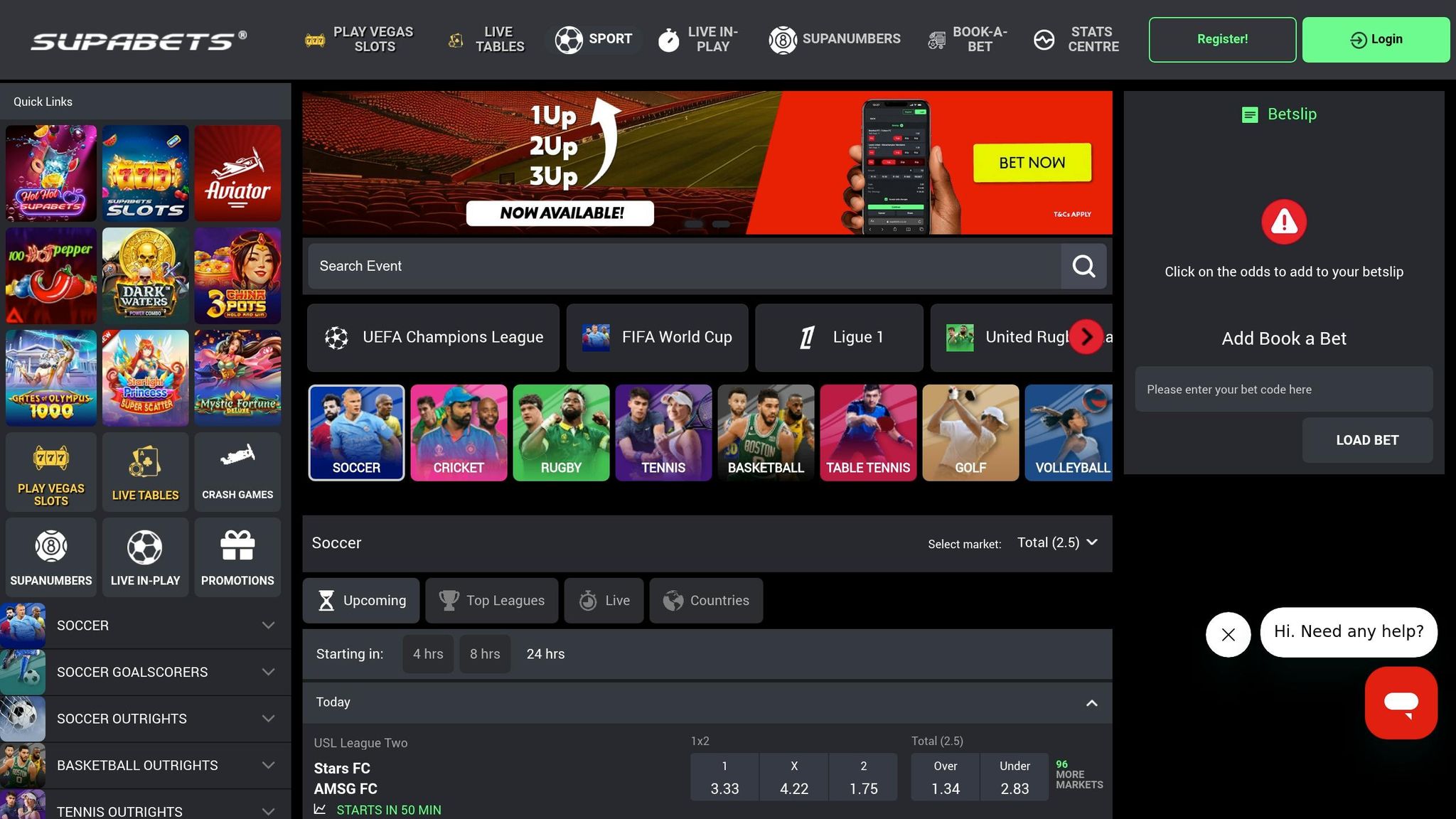
Technology can be a powerful ally in staying disciplined. Supabets offers tools designed to help you stick to your limits. For instance, you can set deposit limits on a daily, weekly, or monthly basis. A monthly cap of R1 000 or a weekly limit of R250 can help you avoid the temptation of adding funds during a losing streak.
If emotions start to take over after a string of losses, Supabets’ time-out feature lets you lock yourself out of your account for a cooling-off period. A 72-hour time-out can help you step back without making a permanent decision. Additionally, the platform caps all bets at R10 000 and provides a Cash Out feature, which allows you to exit a live bet early if the pressure of the game is clouding your judgement. These tools are most effective when set up in advance, rather than in the heat of the moment.
Tracking Your Bets and Emotional State
Keeping a record of your bets alongside your emotional state can offer valuable insights. Use a notebook, spreadsheet, or app to log session details like the date, market, stake (in ZAR), odds, and results. Add an emotional rating (e.g., 1 = calm, 5 = upset) both before and after each session.
Reviewing this log weekly can uncover patterns you might not notice otherwise. For example, you might find that late-night sessions after 21:00 lead to higher stakes and bigger losses, or that Friday nights are particularly costly. By identifying these trends, you can turn frustration into actionable steps. A simple rule like "If my pre-session emotional rating is 4 or 5, I don’t play" can help you connect emotional awareness to better decision-making.
Developing a Long-Term Mindset
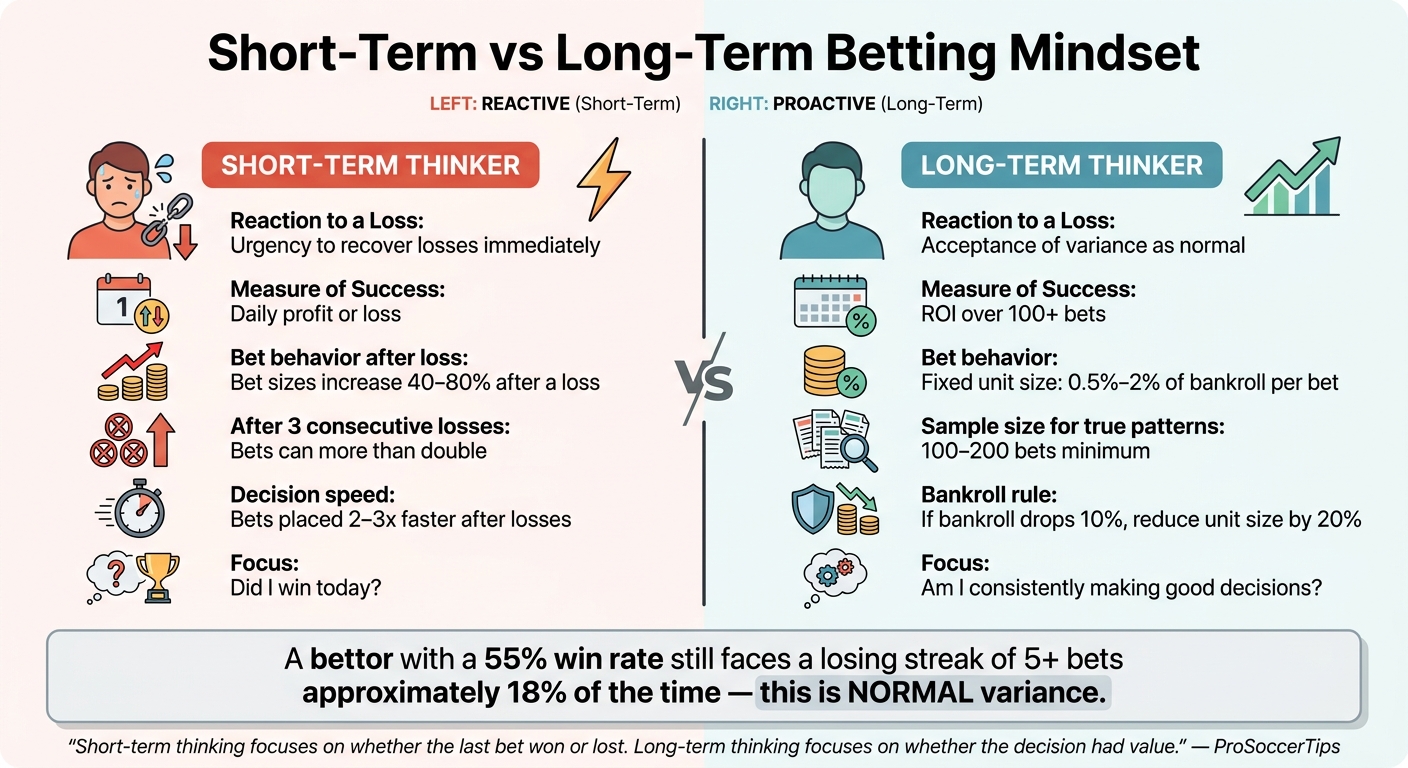
Short-Term vs Long-Term Betting Mindset: Key Differences
To build on the foundation of managing immediate emotions, adopting a long-term mindset is essential for refining and evaluating your betting strategy consistently.
Understanding Variance and Long-Term Patterns
Losing streaks are an unavoidable part of betting – even for those with skill and experience. This is because results naturally fluctuate over time. For example, a bettor with a 55% win rate can still expect to experience a losing streak of five or more consecutive bets roughly 18% of the time. Recognising this variance helps you avoid unnecessary stress and prevents you from mistaking normal fluctuations for personal failure.
Avoid judging your performance based on a small sample of results. True patterns and insights only emerge after evaluating 100 to 200 bets. Until then, what you’re seeing is likely just noise. Instead of asking, "Did I win today?" shift your focus to, "Am I consistently making good decisions?" This mindset differentiates reactive bettors from those who maintain control and discipline.
"Short-term thinking focuses on whether the last bet won or lost. Long-term thinking focuses on whether the decision had value and followed a disciplined process."
| Mindset | Reaction to a Loss | Measure of Success |
|---|---|---|
| Short-term (reactive) | Urgency to recover losses immediately | Daily profit or loss |
| Long-term (proactive) | Acceptance of variance as normal | ROI over 100+ bets |
By understanding variance, you can better assess whether a loss is simply part of the process or a signal to adjust your strategy.
Treating Losing Streaks as Learning Opportunities
When facing a losing streak, ask yourself: Is this a result of variance, or is there an issue with my strategy? These are two distinct challenges that require different approaches. Variance calls for patience, while a flawed strategy requires adjustments.
A betting journal can be an invaluable tool for post-loss analysis. Reflect on questions such as: Was my decision based on thorough research or just a hunch? Did I increase my stake out of frustration? Would I make the same bet again when calm? These reflections help distinguish between unavoidable variance and areas where your strategy may need improvement.
"One loss means nothing. A series of correct decisions means everything."
If your bankroll decreases by 10%, reduce your unit size by 20%. If it drops by 20%, halve your stakes. This approach keeps you in the game while avoiding panic-driven decisions.
Balancing your betting habits with life outside the game is another critical part of maintaining discipline.
Keeping Gaming in Balance With Daily Life
Betting should be treated like any other leisure activity – it needs boundaries. Set aside specific time slots, a budget, and a clear endpoint. If gaming begins to interfere with your work, relationships, or sleep, it’s time to stop.
Taking a break is not a sign of weakness; it’s a mark of discipline. If you notice that losses are affecting your mood – leading to irritability, trouble concentrating, or anxiety – these are clear indicators to step back. When betting stops being enjoyable, the best decision is to pause, reset, and return only when you’re in the right frame of mind.
Conclusion: Taking Control of Your Emotions During Losing Streaks
Losing streaks are inevitable, even for the most skilled bettors. The key to navigating them lies not in how much you know about the game, but in how you manage your emotions and behaviour when setbacks occur.
What really matters is how you respond to losses. Reacting impulsively – like chasing losses or raising your stakes out of frustration – can lead to even bigger problems. That’s why having predefined rules, such as fixed stake sizes and daily loss limits, is so important. These guidelines help you avoid making emotional decisions in the heat of the moment.
"Winners are not those who bet more, but those who think more clearly and act with discipline."
To avoid common pitfalls, adopting a disciplined approach is non-negotiable. Tools like cooling-off periods, percentage-based staking, and keeping a betting journal can help you stay rational when emotions run high. And if you ever feel that betting is causing more stress than enjoyment, remember that the National Responsible Gambling Programme (NRGP) is available to help. They offer free, confidential support at 0800 006 008, or you can SMS "HELP" to 076 675 0710.
"Losing streaks are temporary. Poor discipline is permanent."
While you can’t avoid losing streaks entirely, your response to them is what defines your success. Staying calm, sticking to a structured plan, and focusing on long-term goals is where true control begins.
FAQs
How can I tell if my losing streak is due to variance or a poor strategy?
To get to the root of the issue, shift your attention to your process instead of the outcomes. Variance is a natural part of betting, especially if your Closing Line Value (CLV) is positive, your bets are based on thorough research, and you maintain a consistent approach. On the other hand, if your CLV is negative, you’ve strayed from your research, or you’re placing bets in areas where you lack expertise, it could point to a flawed strategy.
What’s a sensible stop-loss and stake size for my bankroll in Rands?
To keep your bankroll under control, aim to stake 1% to 2% of your total bankroll on each bet. For instance, if your bankroll is R1,000, your bets should range between R10 and R20. Establish a stop-loss limit by ending your session if you lose 40% to 50% of your session budget. Alternatively, call it a day after losing 5 units. Supabets offers loss limit tools to help you maintain discipline and control.
Which Supabets limits should I set before I start betting?
To maintain control, take advantage of your Supabets account settings to establish clear limits. You can adjust daily or weekly deposit limits to keep your spending in check, set loss limits to halt betting once you reach a certain threshold, and activate session time limits to ensure you’re logged out automatically after a specific period. Additionally, enable reality checks to receive playtime notifications and aim to keep individual bets between 1%-3% of your bankroll for better money management.