Weather can change the bet, even when it does not change the better team. If I ignore heat, rain, wind, or altitude before kick-off, I can back the right idea in the wrong market.
Here’s the short version:
- Heat often slows matches and cuts pressing.
- Rain can lead to loose touches, bad clearances, and messy phases.
- Wind can spoil long passes, crosses, and set-piece delivery.
- Altitude can tire visiting sides and reduce their press.
- Venue and pitch can make all of that hit harder.
- Team quality still comes first. Weather is a final check, not the main reason for a bet.
If I’m looking at totals, BTTS, cards, or corners, weather can matter more than it does in the match winner market. That’s because poor conditions often change tempo, ball control, and chance type before they change the gap between the two teams.
A simple pre-match check helps:
- Look at the forecast close to kick-off
- Check whether the ground or altitude makes the weather worse
- Ask which team style suffers more
- Match the conditions to the right market
- Watch for delays that could lock up my stake
| Condition | What I’d expect | Markets I’d review |
|---|---|---|
| Extreme heat | Slower pace, less pressing, more tired legs | Under 2.5 Goals |
| Heavy rain | Scrappy play, slips, more errors | BTTS, Over Cards |
| Strong wind | Poor crossing, weaker long passing | Under 2.5 Goals |
| High altitude | Faster fatigue, less pressure on the ball | Under Goals, Under Corners |
One thing I keep in mind: bookmakers still price the main factors first – squad strength, form, injuries, and match-up. Weather only shifts the view when conditions are harsh enough to move the game away from its normal pattern.
So my takeaway is simple: use weather as a filter. If the forecast points to a slower, messier, or more stop-start match, I should test whether that changes the price in goals, cards, BTTS, or corners before I place the bet.
The Impact of Weather on Football Betting Strategies
sbb-itb-00c3b18
Weather conditions that change match dynamics
Rain, wind, heat, and cold can change a match in plain, visible ways. They affect ball speed, pressing intensity, and chance quality. That matters because the game’s tempo, the number of chances, and scoring patterns can all shift depending on the conditions on the day.
Rain and wet pitches
Wet pitches often slow ball movement, lead to more miscontrols, and break up clean passing sequences. When that happens, teams usually play it safer. You’ll often see shorter, lower-risk passes, or a move towards more direct football instead of long spells of neat build-up.
Wind, heat, and cold
Rain isn’t the only factor. Wind and temperature also shape match rhythm in a big way. Wind can throw off long passes and make set pieces harder to judge. Heat and cold tend to lower the tempo and make sustained pressing tougher to keep up over time.
Why weather creates betting risk
Weather can push a match away from the logic behind pre-match prices. Most markets start with a baseline view of team quality. But a wet pitch, strong wind, or high altitude can make that view less useful. The first signs usually show up in tempo, chance quality, and the markets linked to both.
How conditions shift tempo and scoring patterns
Tough conditions tend to drag matches in one of two directions: a slow, careful contest or a messy game full of errors. Either way, uncertainty goes up.
When that happens, goal totals can be harder to trust, while set-piece markets may matter more. The risk isn’t only backing the wrong result. It’s picking the wrong market for the conditions on the day.
Why venue and pitch conditions amplify weather impact
Venue matters because some grounds make weather effects hit harder. High-altitude venues thin the air, lower pressing intensity, and force visiting teams into shorter, simpler passes. For teams that train at sea level, that’s a big disadvantage.
Heavy rain and poor pitch surfaces create similar issues. They disrupt possession-based styles and increase mistake rates. As a result, the match becomes harder to price well before kick-off.
How to adjust betting decisions for weather
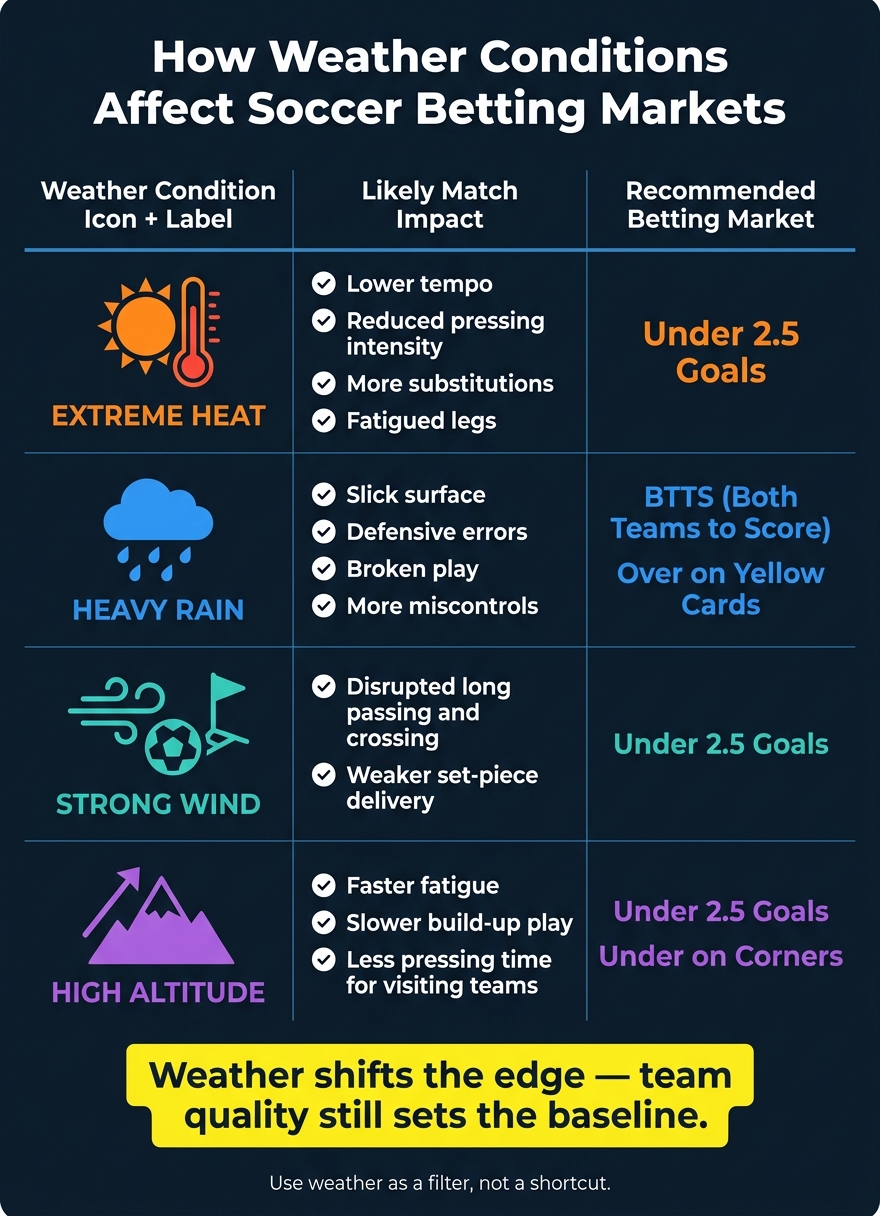
How Weather Conditions Affect Soccer Betting Markets
A pre-match checklist for weather-based decisions
The goal isn’t to predict the weather down to the minute. It’s to stop the weather from warping your pre-match view. You’re checking whether conditions change the price enough to matter, not just noting that rain or heat is on the way.
Check the forecast as close to kick-off as possible. Conditions can swing fast, and what you see in the morning can look very different by kick-off. Once you have a better read, run through four simple checks:
- Does the venue amplify the weather? A high-altitude ground already slows the tempo and cuts pressing time. Add extreme heat, and that effect gets stronger.
- Does the weather hurt one team’s style more than the other’s? A side built on quick, short passing will struggle more on a soaked pitch than a team that plays direct and vertical.
- Which market fits the conditions? When open play gets messy, value can shift towards set-pieces. When the game slows down, Under goals markets often come into play.
- Could weather delay kick-off? If severe weather might delay the start, your stake could be tied up for longer than planned.
These checks help you work out whether the weather changes the match enough to shift your market view.
How weather can shape common market views
Extreme heat tends to slow the game and reduce pressing intensity. That points towards the Under 2.5 Goals market. Heavy rain can lead to broken play and defensive mistakes, which creates chances in a scrappier way. That makes Both Teams to Score (BTTS) and Over on Yellow Cards more relevant. Strong wind can throw off crossing and long passing, especially for technical teams, so Under 2.5 Goals is often a good starting point.
The table below turns those signals into market direction:
| Condition | Likely Match Impact | Market to Consider |
|---|---|---|
| Extreme heat | Lower tempo, reduced pressing, more subs | Under 2.5 Goals |
| Heavy rain | Slick surface, defensive errors, broken play | BTTS; Over on Yellow Cards |
| Strong wind | Disrupted passing and crossing | Under 2.5 Goals |
| High altitude | Faster fatigue, slower build-up, less time to press | Under 2.5 Goals; Under on Corners |
Use weather to test the price, not to replace team quality. Weather can shift the edge, but team quality still sets the baseline.
When weather matters less and the final takeaway
Team quality still sets the baseline
Once you’ve checked the forecast, the next step is simple: ask how much it should actually change the price.
Bookmakers usually start with the big stuff first – team quality, current form, injuries, and defensive strength. Weather comes later. It matters, but it doesn’t lead the process.
In tight fixtures, or when conditions are harsh, weather can push the betting angle one way or the other. But in clear mismatches, the better team will usually still drive the market.
Final summary: use weather as a filter, not a shortcut
Weather changes match conditions. It does not change the basic logic behind the market.
Start with team quality and form. Then use weather as a final check. If conditions are extreme, there may be a shift in value. Still, that shouldn’t outweigh the gap in quality between the sides. That’s the right way to treat it: a pricing filter, not a prediction shortcut.
Use weather as a filter, not a shortcut, when placing your soccer bets on Supabets.
FAQs
How much should weather change my bet?
Weather can shift a match before the whistle even goes. Bookmakers lean on deep team data and stats models, but weather is still a major variable. It can affect how players perform and even chip away at home advantage.
That matters for betting. A strong angle in the morning can look very different by kick-off if conditions turn.
Keep a close eye on the forecast, especially when the weather looks unstable. It can change the tempo, affect stamina late in the game, and alter the chances of goals.
Which betting markets are most weather-sensitive?
Markets tied to goal scoring are usually the most sensitive to the weather. Heavy rain or strong winds can disrupt play, blunt attacking rhythm, and lead to lower-scoring matches.
That puts markets like Over/Under 2.5 Goals under the most pressure. At the same time, any market can be affected by unexpected delays or even match abandonment.
When should I ignore the weather?
You can usually set weather aside when the official governing body has clear rules for settling interrupted matches. Bets are settled based on the official competition result, so you don’t need to work out weather-related voids on your own.
That said, it’s still worth checking conditions before kick-off. A sudden downpour, strong wind, or heavy pitch can change how a team plays and even tilt home advantage in ways the market hasn’t fully priced in yet.