Choosing between live betting and pre-match betting depends on your style, goals, and experience. Pre-match betting locks in odds before the game, offering stability and time for research. Live betting happens during the match, with odds constantly changing based on real-time events, requiring quick decisions. Each has its strengths and risks, and combining both can enhance your strategy.
Key Points:
- Pre-Match Betting: Fixed odds, ideal for research and planning, better for beginners.
- Live Betting: Dynamic, real-time odds, suited for quick thinkers and experienced bettors.
- South African Context: Popular in sports like PSL football, rugby, and cricket.
- Risk Management: Separate bankrolls for each style; limit live betting stakes due to volatility.
Quick Comparison:
| Feature | Pre-Match Betting | Live Betting |
|---|---|---|
| Odds Movement | Fixed once placed | Changes every few seconds |
| Decision Time | Ample time for research | Requires split-second decisions |
| Risk Level | Lower, predictable | Higher, due to rapid market shifts |
| Best For | Beginners, careful planners | Experienced, quick decision-makers |
| Market Availability | Broad, including accumulators | Focused on real-time micro-markets |
Both approaches have their place. Pre-match betting suits those who prefer preparation, while live betting offers opportunities for those who thrive on fast-paced action. South African sports fans can benefit from understanding these styles to make more informed bets.
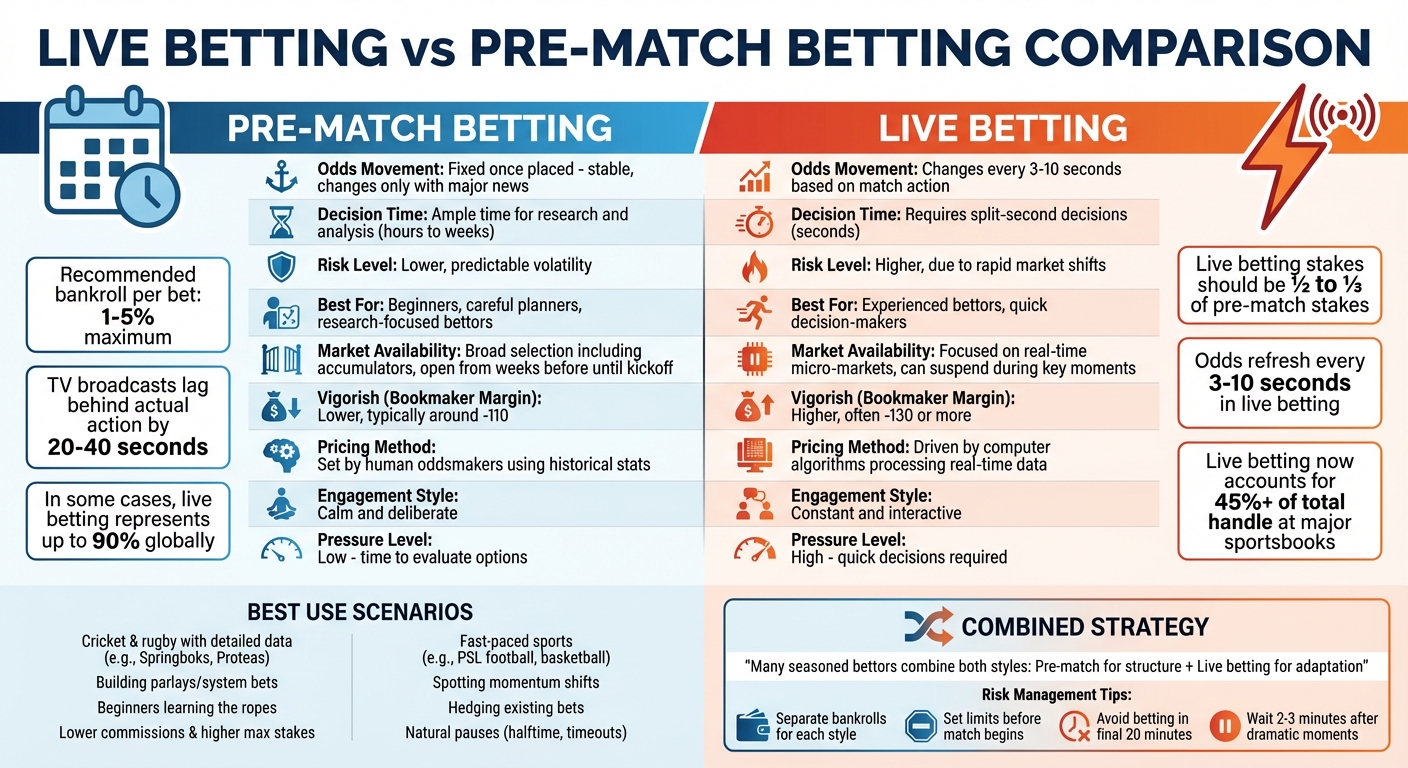
Live Betting vs Pre-Match Betting: Complete Comparison Guide
How Live Betting Works
Live betting lets you place wagers in real time as the match unfolds. Unlike pre-match betting, where odds are locked in before the game starts, live betting adjusts dynamically to every goal, penalty, or shift in momentum. This fast-paced setup calls for quick decision-making.
The process is simple but requires sharp focus. Head to the Live section, pick an ongoing match, choose a market (like Next Goal Scorer or Winning Margin), and confirm your stake. Once you click "Place Bet", there’s typically a 2–10 second delay as the system processes live updates. During critical moments – like VAR reviews, penalties, or red cards – markets might "freeze" while bookmakers recalculate the odds. These rapid changes are a key feature of the fluctuating odds discussed below.
Real-Time Odds and Market Changes
One of the most exciting aspects of live betting is how real-time events instantly impact the odds. For instance, when a team scores, their odds shorten, reducing potential payouts. Meanwhile, the trailing team’s odds lengthen, offering higher returns but also carrying more risk. A team that starts as a pre-match favourite with odds of 1.30 may see those odds rise to 1.80 or 1.85 by halftime if they haven’t scored, creating opportunities for strategic bettors.
Because TV broadcasts lag behind the actual action by 20–40 seconds, seasoned punters often rely on live stats tickers to confirm events before placing bets. This is especially crucial during the final 20 minutes of a match, where fatigue and desperation can lead to dramatic shifts in odds.
Live Betting Examples from South African Sports
South African sports provide plenty of exciting live betting options. In PSL football, for example, if a strong team like Kaizer Chiefs concedes an early goal, their odds will increase significantly, presenting a potential value opportunity. In rugby, a yellow card during a URC game or a Springbok match can swing momentum quickly, making markets like Next Team to Score or Winning Margin highly reactive. Cricket fans can also dive into live betting during Proteas’ ODI or T20 matches, with markets such as runs per over or method of next dismissal changing immediately after key moments like a dropped catch or a bowling change.
sbb-itb-00c3b18
How Pre-Match Betting Works
Pre-match betting allows you to secure your odds anytime from several weeks to just a minute before the game begins. This stability provides a reliable environment and opens up a variety of markets, making it appealing to those who prefer a calculated approach to betting.
With pre-match betting, your odds are locked in. This means you’ll receive a fixed payout regardless of how the odds might change later. For bettors who prioritise careful analysis over the fast-paced nature of live betting, this predictability is a big draw.
Another advantage is the broader range of betting options available. Pre-match markets include accumulators, intricate handicap bets, and niche options that often aren’t available once the game starts. Plus, bookmakers tend to charge lower commissions on pre-match bets, giving you better value for your money.
Fixed Odds and Pre-Game Analysis
The fixed odds system gives you the luxury of time to thoroughly analyse all the important factors. You can dive into team stats, player form, injury updates, weather conditions, and even historical matchups without feeling rushed. For instance, if you’re betting on a PSL clash between Kaizer Chiefs and Orlando Pirates, you might spend days poring over their recent performances, league standings, and past results at the venue where the match is being held.
"Pre-game wagers give bettors time to research teams, analyze matchups, and make informed decisions." – Matthew Waters
Another perk of pre-match betting is the ability to compare odds across multiple platforms to ensure you’re getting the best deal. However, keep in mind that last-minute news, like an unexpected injury or a sudden lineup change, can cause odds to shift significantly right before the game begins. This methodical approach not only reduces potential risks but also maximises the benefits of detailed research, which is a hallmark of successful pre-match betting.
Pre-Match Betting Examples from South African Sports
South African sports provide plenty of examples of how pre-match strategies can be applied. In PSL football, punters often spend time analysing head-to-head records and league standings before locking in fixed odds for a "Match Result" (1X2) market involving teams like Kaizer Chiefs or SuperSport United. For rugby fans, pre-match markets are popular before Springboks test matches or United Rugby Championship games featuring the Sharks or Stormers. Bettors frequently place "Winning Margin" or "Handicap" bets, guided by the announced starting XV and historical performance at the venue.
Cricket enthusiasts betting on Proteas ODI or T20 games might focus on markets like "Top Batsman" or "Total Boundaries." These bets are often informed by pitch conditions and player strike rates, providing an opportunity for a well-researched wager before the first ball is bowled.
Odds and Pricing: Live vs Pre-Match Betting
The way odds are priced is one of the biggest differences between live and pre-match betting. With pre-match betting, odds are fixed once you’ve placed your bet, meaning your potential payout is locked in. Live betting, however, is a different story – odds are constantly changing, refreshing every 3–10 seconds as the match progresses. This means the odds you see when placing a bet might not be the same by the time you confirm it.
Another key difference lies in the bookmaker’s margin, often called the "vigorish" or "juice." For pre-match betting, the vigorish on point spreads is typically around -110. In live betting, though, this margin can climb to -130 or higher. This reflects the additional risk and unpredictability that come with offering odds in real-time.
The way odds are calculated also varies. Pre-match odds are determined by human oddsmakers who rely on historical data, team performance, and statistical models developed over time. In contrast, live odds are generated by algorithms that process real-time match data – like score updates, remaining time, and momentum shifts – to adjust prices. These algorithms can sometimes overreact to early events. For instance, if a strong team like Kaizer Chiefs concedes an early goal, their odds might lengthen significantly, creating a potential opportunity for bettors who believe they’ll recover.
"Live betting odds are dynamic, change constantly based on what is developing in the match."
During high-stakes moments – such as penalty kicks, VAR reviews, or red cards – sportsbooks often suspend live betting markets to recalculate odds. Pre-match markets, on the other hand, remain open right up until the game starts, giving bettors consistent access to place or adjust their wagers.
Here’s a quick comparison of the two:
Odds Behaviour Comparison Table
| Feature | Pre-Match Betting | Live (In-Play) Betting |
|---|---|---|
| Odds Movement | Stable; changes only with major news like injuries or lineups | Volatile; updates every 3–10 seconds based on match action |
| Vigorish (Bookmaker Margin) | Lower, typically around -110 | Higher, often -130 or more |
| Decision Time | Ample time for research, comparison, and analysis | Seconds to decide before odds shift or markets lock |
| Pricing Method | Set by human oddsmakers using historical stats and projections | Driven by computer algorithms processing real-time data |
| Market Availability | Open from weeks before until kickoff | Can suspend during key moments like penalties or VAR checks |
| Risk Level | Lower volatility; based on pre-game logic and research | Higher; prone to rapid changes and impulsive decisions |
Main Benefits of Live Betting
Live betting offers a dynamic and interactive way to wager, adding layers of excitement and strategy beyond traditional pre-match betting.
Exclusive Markets and Real-Time Engagement
One of the standout aspects of live betting is the introduction of unique "micro-markets." These markets focus on immediate outcomes, like predicting the next goal scorer, the next corner, or which team will hit 20 points first in a basketball quarter. For South African fans, this could mean betting on the next try scorer in a Springboks rugby match or guessing the number of yellow cards in a specific half of a PSL football game.
The real magic lies in the ability to watch the game unfold and make decisions based on live action. As Matthew Waters from LegalSportsReport.com explains:
"When you can see how teams are actually performing, it often presents value opportunities that weren’t available pre-game."
This means you’re not just relying on pre-match stats – you’re factoring in real-time elements like player fatigue, tactical adjustments, or momentum swings that might not yet influence the odds.
Additionally, live betting keeps you engaged throughout the match. Instead of placing a bet and waiting for the final whistle, you can react to game-changing moments like injuries, red cards, or substitutions. This heightened engagement is a big reason why in-play betting now accounts for over 45% of the total handle at major sportsbooks.
These real-time opportunities work hand-in-hand with tools designed to enhance your live betting experience.
Session Management Tools
A key feature of live betting is the Cash Out option, which offers a level of control unmatched by pre-match bets. For instance, if your team is ahead but you sense a shift in momentum – perhaps due to an injury or the opposition gaining the upper hand – you can use Cash Out to lock in a profit before the situation turns against you.
Similarly, if your bet looks like it’s heading for a loss, Cash Out allows you to recover part of your stake, limiting the damage. This feature is particularly useful during high-stakes South African events, where emotions can run high. Just remember that the payout includes a bookmaker fee, so it’s not always the best option for maximising returns.
For more experienced bettors, manually hedging your bets by placing an opposing wager might offer better long-term value in certain scenarios. Whether you’re a casual punter or a seasoned pro, tools like Cash Out provide flexibility and control, making live betting an exciting and strategic option.
Main Benefits of Pre-Match Betting
Pre-match betting is all about strategy and preparation. Unlike the fast-paced nature of live betting, it allows for a more calculated approach, giving you the chance to thoroughly analyse and plan before placing your bets.
Time for Research and Analysis
One of the biggest advantages of pre-match betting is the time it gives you to do your homework. You can dive into team statistics, player form, injury updates, and past match-ups before making a decision. For South African fans, this could mean evaluating the Springboks’ forward pack ahead of a Rugby Championship showdown, checking on Mamelodi Sundowns’ key players ahead of a PSL derby, or reviewing the Proteas’ batting order before a Test match.
But it doesn’t stop there. You can also factor in external elements like weather conditions, referee tendencies, or potential tactical adjustments – all of which could influence the outcome of the event. This kind of preparation helps eliminate guesswork, giving you the confidence that your strategy is based on solid facts.
For those just starting out, this slower, more deliberate approach can be particularly beneficial.
Why Pre-Match Betting Suits New Bettors
If you’re new to betting, pre-match options provide a much more relaxed environment to learn the ropes. Without the constant shifts of live betting, you can take your time to understand how odds work and explore different markets.
"Pre-match betting is usually better for beginners. It gives more time to research, compare sports betting odds, and make thoughtful decisions without pressure"
Another bonus? Pre-match markets often come with lower bookmaker commissions compared to live betting, which means more flexibility and less financial pressure. This makes it easier to experiment with different bet types and gradually build your confidence. Plus, the structured nature of pre-match betting encourages better bankroll management and helps you avoid rash decisions – skills that are crucial as you gain experience.
Strategy and Risk Management
Whether you’re placing bets before the game starts or jumping in during live action, managing your bankroll wisely is what keeps you in the game. The key rule? Never stake more than 1% to 5% of your total bankroll on a single bet. This approach cushions you against the inevitable losing streaks that even the best bettors face.
Bankroll Allocation and Timing
Pre-match betting tends to be more methodical, focusing on fewer, well-researched bets aimed at steady, gradual gains. For example, you might pick one or two bets on a Saturday PSL fixture after digging into team form and injury updates. Live betting, on the other hand, is a faster-paced world where multiple bets can quickly drain your funds if you’re not careful. It’s worth noting that live betting has grown immensely, now making up over 45% of the total betting handle for major sportsbooks, and in some cases, as much as 90% globally.
The trick to handling both styles is separating your bankroll. Split it into two parts – one for pre-match bets and another for live betting. For live wagers, use smaller stakes, often half or a third of what you’d bet pre-match, as in-play odds shift rapidly. If you’re new to live betting, start with the smallest stakes possible and stick to a dedicated budget until you feel confident.
Timing is another critical factor. For live bets, avoid impulsive decisions after dramatic moments like a goal or a red card. Markets can take a couple of minutes to stabilise, so give yourself that time to regain composure. A good strategy is to place bets during natural pauses – halftime, injury breaks, or timeouts – when odds are less volatile. Experienced bettors often wait for these calmer moments to make more informed decisions.
Another effective strategy is hedging. For instance, if your pre-match bet on the Springboks looks like it’s going to win but you’re unsure about the final outcome, you can hedge with a live bet to lock in some profit. Tools like Auto Cash-Out and Partial Cash-Out can also help you secure funds during the game without constant monitoring. However, frequent cash-outs can eat into your long-term profits due to bookmaker margins.
Lastly, managing your mindset is just as important as managing your money.
Psychological Differences Between Betting Styles
The mental game differs greatly between live and pre-match betting. Live betting demands quick decisions, often within seconds, especially in fast-moving sports like basketball or tennis. This high-pressure environment can lead to emotional betting, where excitement or frustration drives impulsive choices. In fact, most beginners make their poorest live bets within the first three minutes of a match due to early overreactions.
Pre-match betting offers a more relaxed experience. You have hours – or even days – to analyse statistics, compare odds, and make thoughtful decisions without the adrenaline rush of live action. As the LiveScore Editorial Team puts it:
"Long-term bettors set goals, manage their bankrolls carefully, and make calculated decisions based on data".
| Feature | Live Betting Psychology | Pre-Match Betting Psychology |
|---|---|---|
| Primary Driver | Instinct and real-time input | Research and data analysis |
| Pressure Level | High; decisions made quickly | Low; time to evaluate options |
| Risk of Impulse | High; driven by momentum | Low; bets made calmly |
| Engagement | Constant and interactive | Calm and deliberate |
To handle the intensity of live betting, set limits before the match begins. Decide on a maximum amount you’re willing to lose that day and cap the number of live bets you place to avoid chasing losses. It’s also wise to avoid betting in the final 20 minutes of a match when emotions and fatigue can cloud your judgment. For pre-match betting, keeping a detailed record of bets – including stakes, odds, and reasoning – can help you evaluate which strategies work best for you. This kind of self-awareness ensures that your betting approach aligns with both your strategy and temperament.
When to Use Live Betting vs Pre-Match Betting
Choosing between live betting and pre-match betting isn’t just about preference – it’s about understanding the dynamics of each and knowing when to leverage them for the best outcomes. Factors like the sport, your preparation level, and how comfortable you are with quick decisions play a big role.
Best Scenarios for Live Betting
Live betting is your go-to when you can spot shifts or opportunities that weren’t clear before the match began. For instance, imagine the Springboks, heavy favourites, fall behind early to a weaker opponent. Odds might stretch in favour of the underdog, but if your pre-match research tells you the Springboks are still likely to dominate, this could be your moment to capitalise.
Fast-paced sports like PSL football, rugby, and basketball are particularly suited to live betting. These games often see momentum swing rapidly. For example, if Kaizer Chiefs are controlling possession but haven’t scored yet, live odds might not fully reflect their dominance. This creates a window of opportunity for sharp bettors who are closely following the action. Additionally, live betting is a handy tool for hedging. Say you’ve placed a pre-match parlay and the final leg is still undecided – live betting allows you to adjust your position, either locking in some profit or limiting potential losses.
That said, a stable internet connection is crucial. Live odds can lag by 5–40 seconds, so timing is everything. The best time to place live bets is during natural pauses in play, like halftime, timeouts, or injury breaks. These moments provide more stable odds and reduce the risk of markets freezing mid-bet.
Best Scenarios for Pre-Match Betting
Pre-match betting, on the other hand, is ideal when you have time to dive into thorough analysis. Sports like cricket and rugby, which offer detailed data on factors like weather, player form, and historical matchups, are perfect for this approach. For example, if you’re betting on a Proteas Test match or a Currie Cup game, the pre-match period gives you plenty of time to study pitch conditions, fitness updates, and head-to-head stats.
This method is also a better starting point for beginners. Without the pressure of split-second decisions, you can take your time to understand how odds work, compare them across platforms, and make more calculated choices. Pre-match betting often comes with lower commissions and higher maximum stakes, which is appealing for those placing larger wagers. Plus, once your bet is placed, the odds are locked in, protecting you from the sudden price changes that are common during live games.
If you’re building parlays or system bets, pre-match betting offers a broader selection of markets and makes managing your bets simpler. It’s a calmer, more deliberate way to bet, where success is rooted in preparation rather than reacting to the chaos of live play.
Choosing the Right Betting Style
Deciding between live and pre-match betting often comes down to your personality, experience, and goals. Pre-match betting is great for those who enjoy detailed research and making calculated decisions. It’s often seen as a good starting point for beginners because it allows for more time to analyse and plan.
On the other hand, if you thrive in high-pressure situations and enjoy the thrill of making split-second decisions, live betting might be more your speed. As Tommy D explains, pre-match betting suits those who prefer research-focused strategies, while live betting is ideal for those who excel at reacting to events as they unfold.
Your comfort with risk is another key factor. Pre-match betting offers a more predictable, lower-risk option with fixed odds, making it appealing to those who prefer a methodical approach. In contrast, live betting is for those who can handle higher risks and the unpredictability of rapidly changing odds. Interestingly, live betting now accounts for over 45% of the total handle at major sportsbooks, showing its growing popularity.
Many seasoned bettors find value in combining both styles. For instance, they might place well-researched pre-match bets for structure and then use live betting to adapt their strategy as the game progresses. This hybrid approach allows you to take advantage of the strengths of both methods. However, it’s crucial to set strict bankroll limits, especially with live betting, where the fast pace can quickly deplete your funds if you’re not careful.
FAQs
How do I spot value in live odds without chasing losses?
Spotting value in live odds means keeping a close eye on real-time changes and pinpointing gaps between the market prices and the probable outcomes. Rely on statistical analysis rather than letting emotions take over during moments like goals or red cards. Stick to your pre-set limits, and focus on markets with lower variance – like the next goal scorer or corner kicks. These can help you evaluate value more precisely while steering clear of rash decisions.
Which live markets are safest for beginners to try first?
For those just starting out, the Match Winner (Win-Draw-Win) market is a great option. It’s straightforward – you simply bet on whether a team will win or if the match will end in a draw. This makes it less unpredictable and easier to grasp.
Other beginner-friendly options include markets like Next Goal Scorer or Total Goals. These focus on clear, measurable events during the game, making them perfect for newcomers who want to avoid overly complicated analysis while gaining experience and confidence.
How should I split my bankroll between live and pre-match bets?
Splitting your bankroll wisely comes down to your betting strategy, how much risk you’re comfortable with, and your level of experience. Many bettors find it safer to allocate a bigger chunk of their funds to pre-match bets. Why? Because these bets give you time to analyse stats, trends, and other factors before placing your wager.
For live betting, it’s smart to set aside a smaller, controlled percentage of your bankroll. This lets you take advantage of in-play opportunities without overexposing yourself to risk. A common approach is to divide your funds with 70-80% for pre-match bets and 20-30% for live betting. This way, you can keep risks in check while still enjoying the thrill of live action.